KEYNOTE SPEAKERS
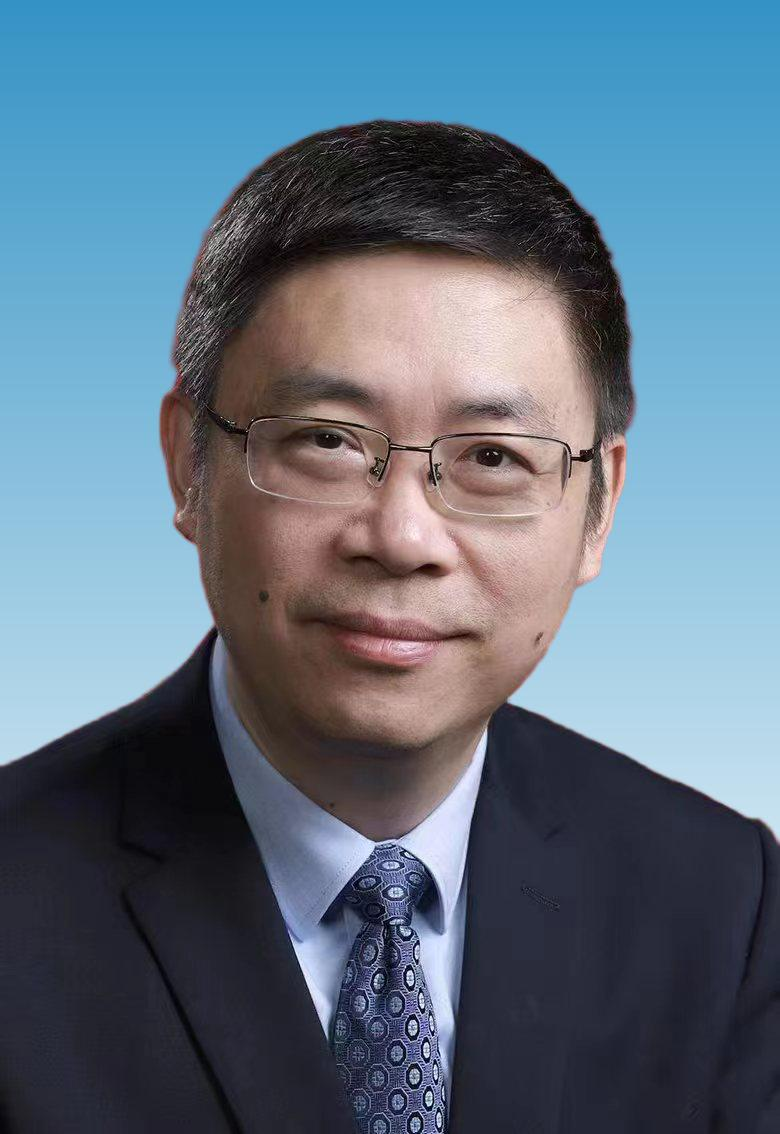
Prof. Yan-qing Lu
Nanjing University, China
Speech Title:
Liquid Crystal Based Dynamic Edge Detection and Imaging
Abstract: Optical edge
detection, as an efficient means of data compression and
feature extraction, holds great potential in fields of
machine vision and biomedical imaging. However, conventional
optical edge detection devicesexhibit fixed functionality
once fabricated, lacking dynamic tunability, which limits
their application in complex scenarios. Liquid crystals
(LCs), as soft matter with excellent stimulus-responsiveness
and multidimensional light manipulation capabilities,
provide an ideal platform for realizing dynamically tunable
optical edge detection. In this presentation, I will
introduce our recent research advances in LC-tunable dynamic
edge detection including wavelength-selective edge
detection, dynamic electrical switching of the edge
orientation and an electrically tunable heralded
single-photon imaging platform. These works reveal the
immense application potential of “soft mattonics” in
intelligent optical information processing, particularly in
optical computing and quantum imaging.
Bio: Yan-qing Lu received both his BS and Ph.D. degrees from Physics department, Nanjing University, China, in 1991 and 1996 respectively. Then he stayed in the same University as a lecture (1996) and associate professor (1998). He worked in Academia and Industry in the United States from 2000 to 2006, where he developed a serial of liquid crystal based fiber-optic devices with his colleagues in Chorum Tech., CREOL, UCF and EZconn. Corp. He is currently a Changjiang distinguished professor at Nanjing University and a Fellow of Optica, Fellow of COS (Chinese Optical Society) and Fellow of CSOE (Chinese Society for Optical Engineering). He currently serves as the director of Chinese Liquid Crystal Society, the executive editor-in-chief for Chinese Optics Letters. His research interests include softmatter photonics (Soft mattonics), nanophotonics and nonlinear optics. He is the author or co-author of over 400 peer-reviewed papers in Science, Nat. Photon., Nat. Nano., Nat. Commun., Sci. Adv., PNAS, PRL, Light Sci. Appl. etc..
Prof. Nikolay Petrov
ITMO University, Russia, Harbin Institute of Technology, China
Speech Title:
Continuous-Wave THz Phase Imaging: Engineering Constraints in System Design, Algorithms and Applications
Abstract: Terahertz
(THz) imaging offers significant capabilities for inspecting
internal structures and material properties invisible to
conventional optical machine vision systems. However, the
transition from physical measurement to visual data relies
heavily on computational phase retrieval and system design
factors often overlooked in literature. To address this
disparity, priority is given to electronic continuous-wave
sources coupled with homodyne and direct intensity
detection, offering a pragmatic balance between system
complexity and phase information retrieval. Critical
components required for practical measurements are reviewed,
including a structured classification of sources and
detection approaches. Engineering constraints, such as Noise
Equivalent Power (NEP) characterization and data acquisition
protocols, are analyzed alongside iterative phase retrieval
algorithms. Applications across diverse sectors, including
telecommunications, biology, medicine, cultural heritage,
food inspection, security, and industry, are examined
through theoretical analysis and practical examples.
Bio: Nikolay V. Petrov received his PhD degree in Optics from ITMO University, Russia. In 2016 he established a digital and display holography laboratory. In 2019 he gained a doctorate (Dr. habil.) degree in optics and became a Leading Professor in 2021, and main Researcher in 2023. In 2023-2024 he was Visiting Professor in Qingdao Innovation and Development Center of Harbin Engineering University, and currently he is a Chair Professor in Harbin Institute of Technology. Dr. Petrov was the recipient of the Russian Federation Government Prize in Education in 2010 and is a winner of several other prizes. He is a topical editor of the following journals: Light: Advanced Manufacturing and Applied Optics, and have the Outstanding Editor award of Light: Advanced Manufacturing in 2021 and 2023.
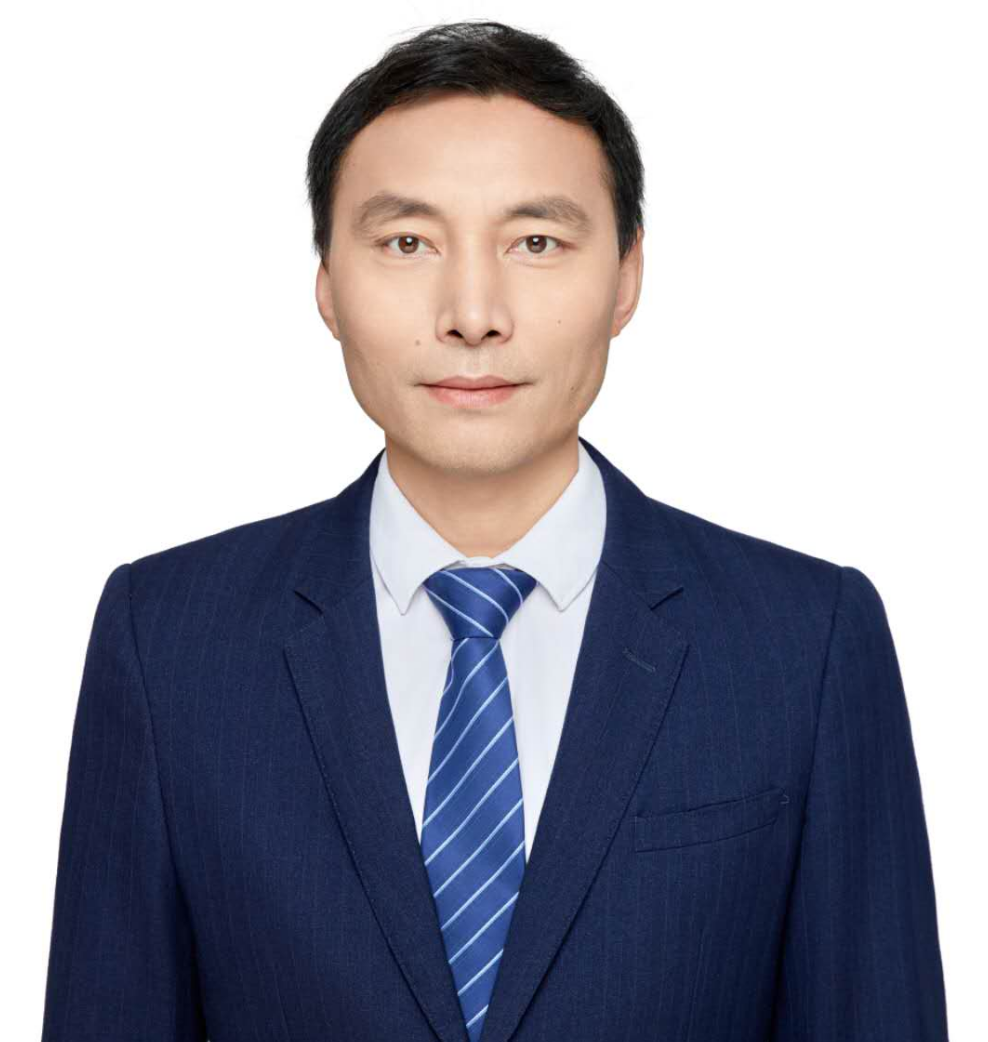
Prof. Yibin Tian
Shenzhen University, China
Speech Title: Towards Intelligent Monitoring and Inspection of Large-Scale Factories: A Ground–Air Collaborative Multi-Agent System with Multi-Modal Perception and Robotic Manipulation
Abstract: Modern industrial facilities require autonomous inspection systems capable of operating reliably in complex, large-scale, and potentially hazardous environments. We present a ground–air collaborative multi-agent, multi-modal factory inspection and monitoring system that integrates unmanned aerial vehicles (UAVs) with heterogeneous ground mobile robots, including a 4-leg–wheeled hybrid AGV and an onboard 6-axis robotic arm, to achieve intelligent factory inspection.
The proposed system exploits the complementary strengths of aerial and ground platforms. UAVs provide rapid, wide-area coverage and access to elevated spaces, while the 4-leg–wheeled AGV combines wheeled efficiency with legged mobility to traverse uneven terrain, stairs, and obstacles. The integrated 6-axis robotic arm enables close-range inspection, precise sensor positioning, contact-based measurements, and manipulation tasks such as valve checking and probe deployment. To support robust perception, the system fuses multi-modal sensing, including RGB, thermal and 3D vision, temperature and tactile sensing, as well as radiation detection, enabling reliable detection of structural defects, thermal anomalies, radiation leakage, and equipment degradation under challenging conditions.
A hierarchical perception and data-fusion framework is developed to achieve spatiotemporal alignment and semantic understanding across modalities and platforms. Cooperative task allocation and motion planning strategies coordinate heterogeneous agents, allowing dynamic role assignment, redundancy-aware sensing, and adaptive re-tasking in response to detected anomalies. Shared semantic maps and inter-agent communication facilitate consistent situational awareness and precise fault localization.
Bio: Yibin Tian is a Professor at Shenzhen University. He received his PhD from the University of California, Berkeley. His research activities focus on computational imaging, multimodal intelligent sensors, multimodal perception and sensor fusion, machine learning, and intelligent robotics. He has led or undertaken major projects funded by the National Natural Science Foundation of China, and the Department of Science and Technology of Guangdong Province. He has 11 years of cutting-edging technology R&D and management experience in Silicon Valley, and has served as a Senior Scientist, Principal Engineer and Chief Engineer at leading and pioneering companies in the optoelectronic sensing and imaging industry. Products he developed have been deployed by more than 20 Fortune 500 companies, including Apple, Microsoft, Intel, TSMC, Samsung, and Huawei etc. He has published over 50 academic papers, holds more than 40 granted U.S. and Chinese patents. He has managed more than 10 multinational interdisciplinary projects in optoelectronic imaging and sensing with successful commercialization, overseeing cumulative R&D funding exceeding RMB 100 million.
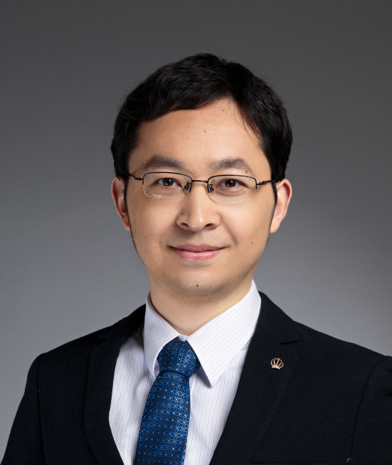
Prof. Guanhao Wu
Tsinghua University, China
Speech Title: Optical Frequency Comb Ranging and Applications
Abstract: As a key technology in high-end equipment manufacturing and assembly, precision distance measurement directly determines and affects product performance, and has an urgent demand and important application value. As a new-generation measurement light source, the optical frequency comb, with its unique time-domain and frequency-domain characteristics, has brought revolutionary breakthroughs to precision distance measurement. This paper mainly focuses on the research progress of optical frequency comb ranging, and its content includes four parts. Firstly, the research background and domestic and foreign progress of optical frequency comb ranging. Secondly, the basic principle of dual-comb ranging and the research progress of key technologies such as pulse asynchronous sampling and noise suppression. Thirdly, the ranging principle based on frequency-modulated electro-optic comb and the results of ultra-high-speed ranging. Finally, the progress in the instrumental development of optical frequency comb ranging and its applications in industrial fields.
Bio: Guanhao Wu is currently an Associate Professor in the Department of Precision Instrument, Tsinghua University. He received Ph.D degree in optical engineering from Tsinghua University in 2008. He used to be a visiting scholar in National Metrology Institute of Japan (NMIJ) from 2011 to 2012. His research interests include frequency comb, comb-based distance measurement and light detection and ranging (Lidar). In recent years, he has published more than seventy international refereed journal papers, and he is the holder of more than thirty Chinese patents. He won the Special Prize of Chinese Machinery Industry Science and Technology Award in 2020, won the First Prize of Science and Technology Progress Award of Chinese Society for Measurement in 2021, won China Industry-University-Research Cooperation Innovation Person Award in 2026. He is also the winner of Mao Yisheng Beijing youth science and technology award.
Speakers in 2027 to be announced soon......